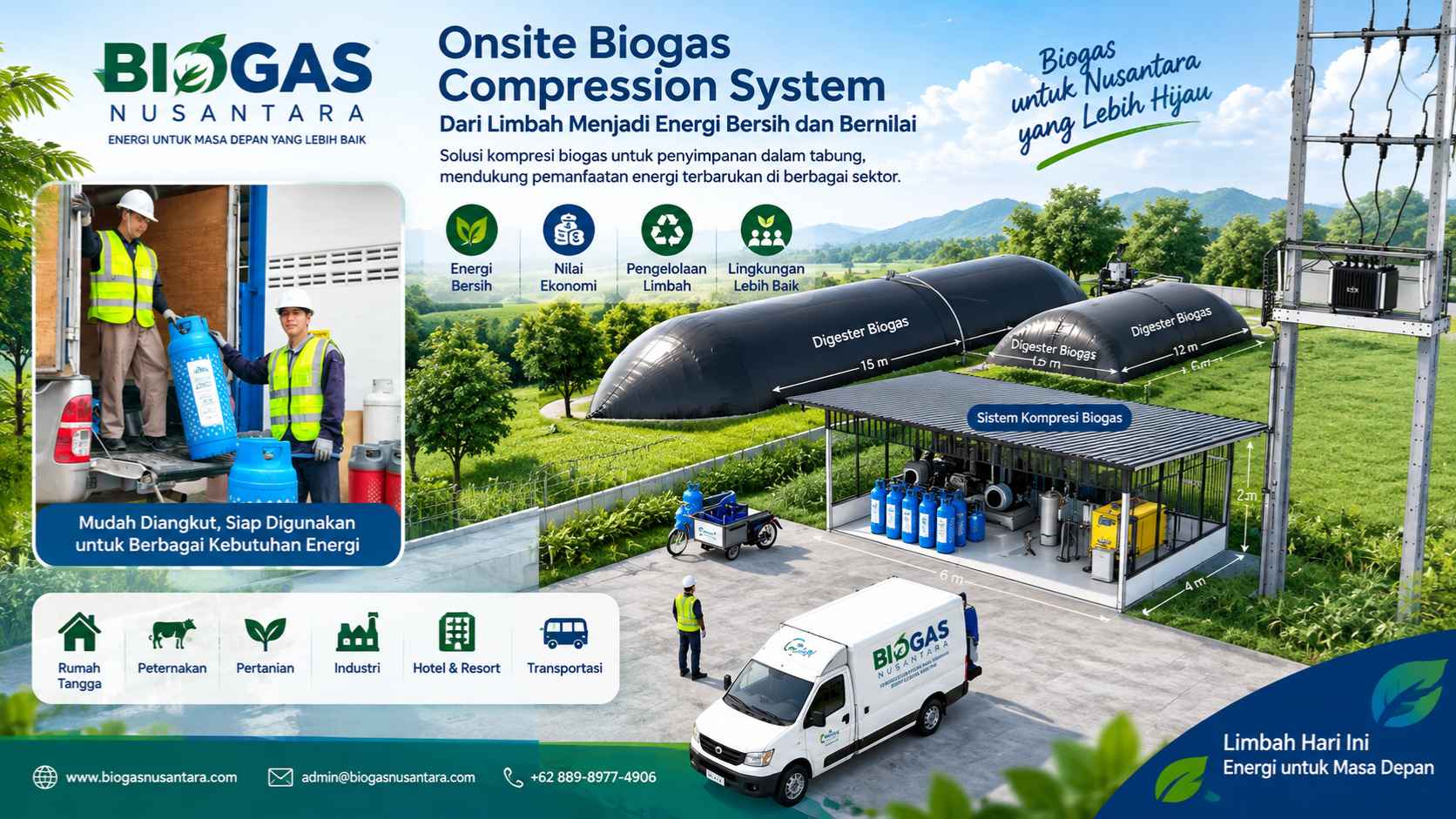
Biogas technology enables organic waste to be converted into an energy source through biological processes that take place inside a biodigester. This system is designed so that organic matter can decompose in an oxygen-free environment, thereby producing biogas.
Generally, the process begins with the collection and preparation of raw materials. Organic waste, such as livestock manure or industrial waste, is collected and its characteristics are adjusted before it enters the biodigester system.
Next, the organic material undergoes anaerobic digestion. Microorganisms gradually break down the organic material, producing biogas that contains methane and carbon dioxide.
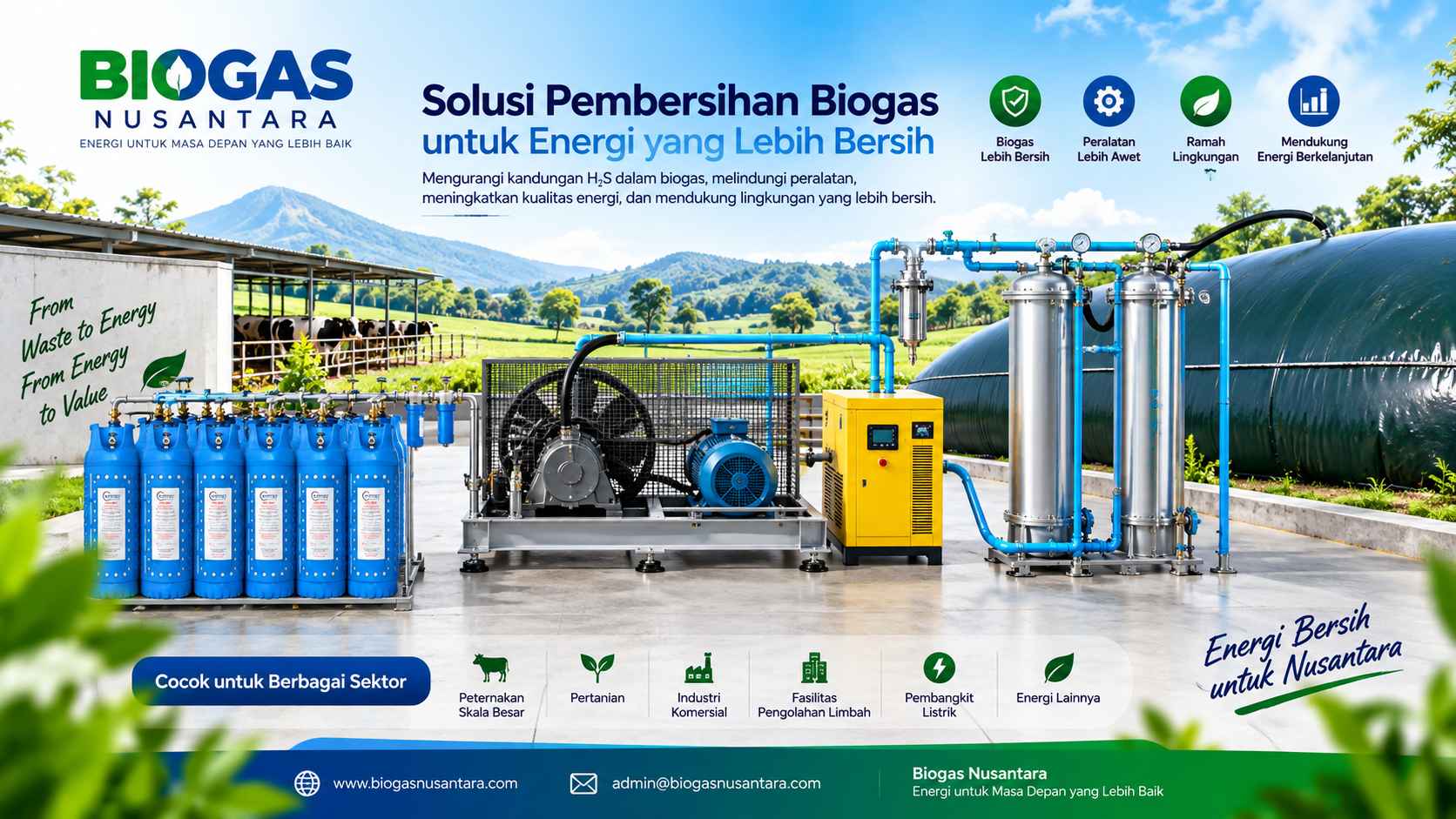
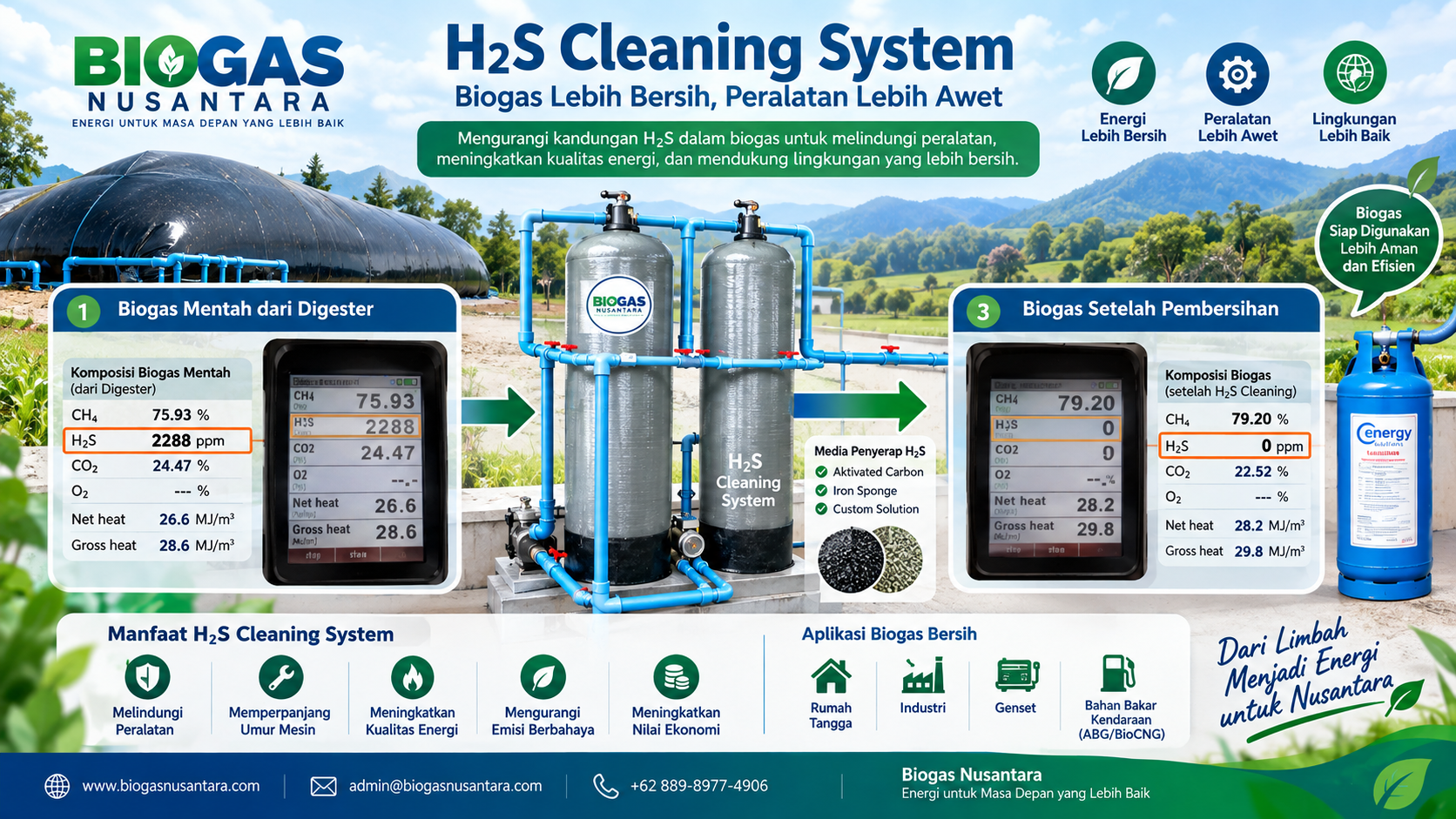
The resulting biogas can then undergo purification and processing, depending on its intended use. For specific applications, impurities such as hydrogen sulfide and carbon dioxide must be reduced to ensure the gas quality meets the required specifications.
In addition to biogas, the process produces digestate—a residual material that still has value and can be used as fertilizer or for agricultural purposes after meeting the necessary processing and usage requirements.
Through this approach, biogas technology not only generates energy but also creates a more integrated waste management system. Waste that was previously a problem can be processed into a resource with both economic and environmental value.