Biogas is a renewable energy source produced through the decomposition of organic matter in the absence of oxygen—a process known as anaerobic digestion. The feedstock can come from various types of organic waste, such as livestock manure, agricultural waste, food waste, and industrial waste.
During production, microorganisms break down organic matter and produce gas consisting primarily of methane (CH₄) and carbon dioxide (CO₂). It is this methane content that makes biogas usable as an energy source.
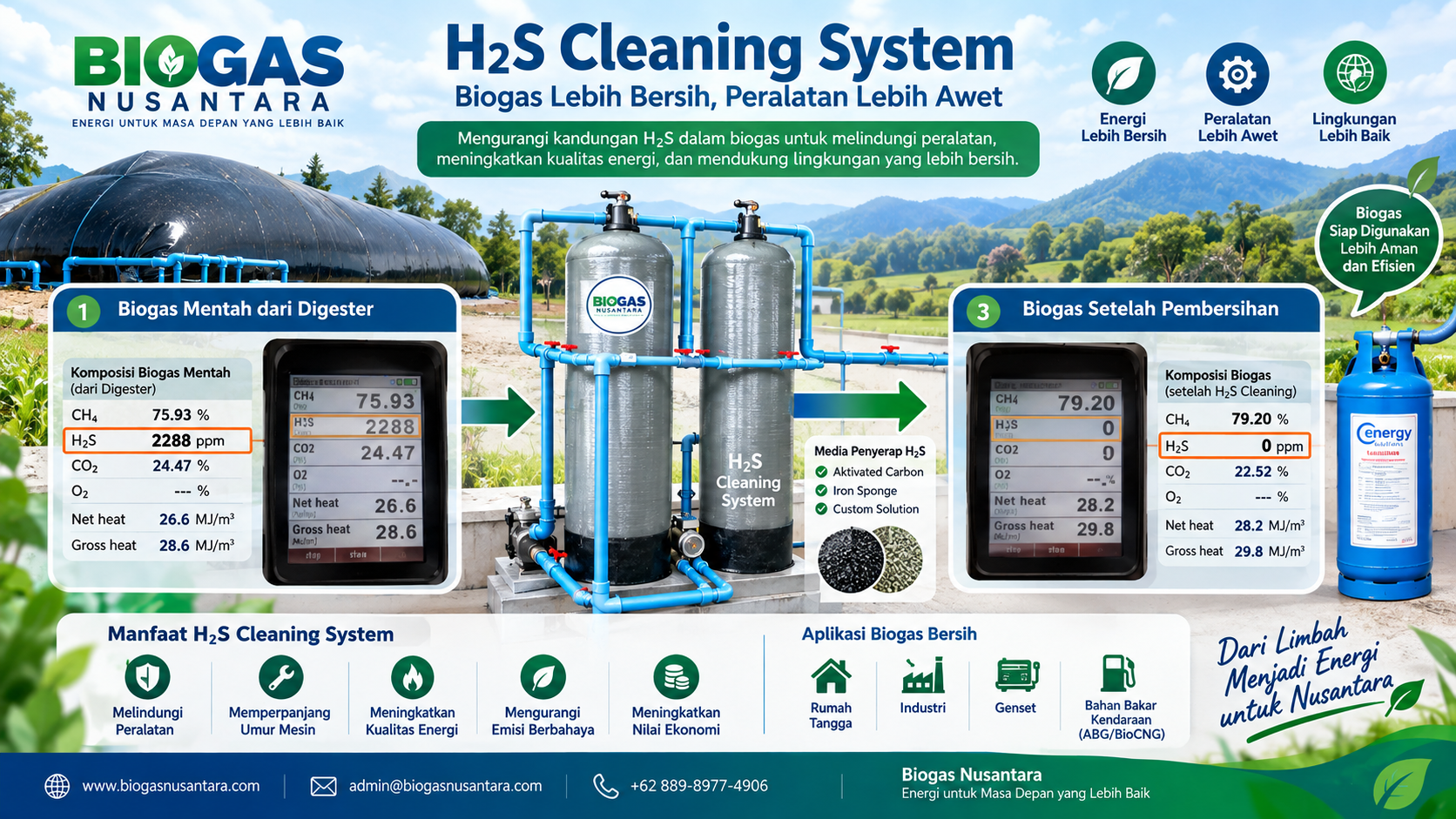
Biogas can be used for a variety of purposes, ranging from cooking fuel and power generation to serving as a feedstock for producing higher-quality biomethane after undergoing a purification process.
In addition to generating energy, biogas technology also helps reduce the volume of organic waste and produces a byproduct called digestate, which can be used as organic fertilizer.
With the right technology, biogas offers a solution that more sustainably links waste management with energy needs.