
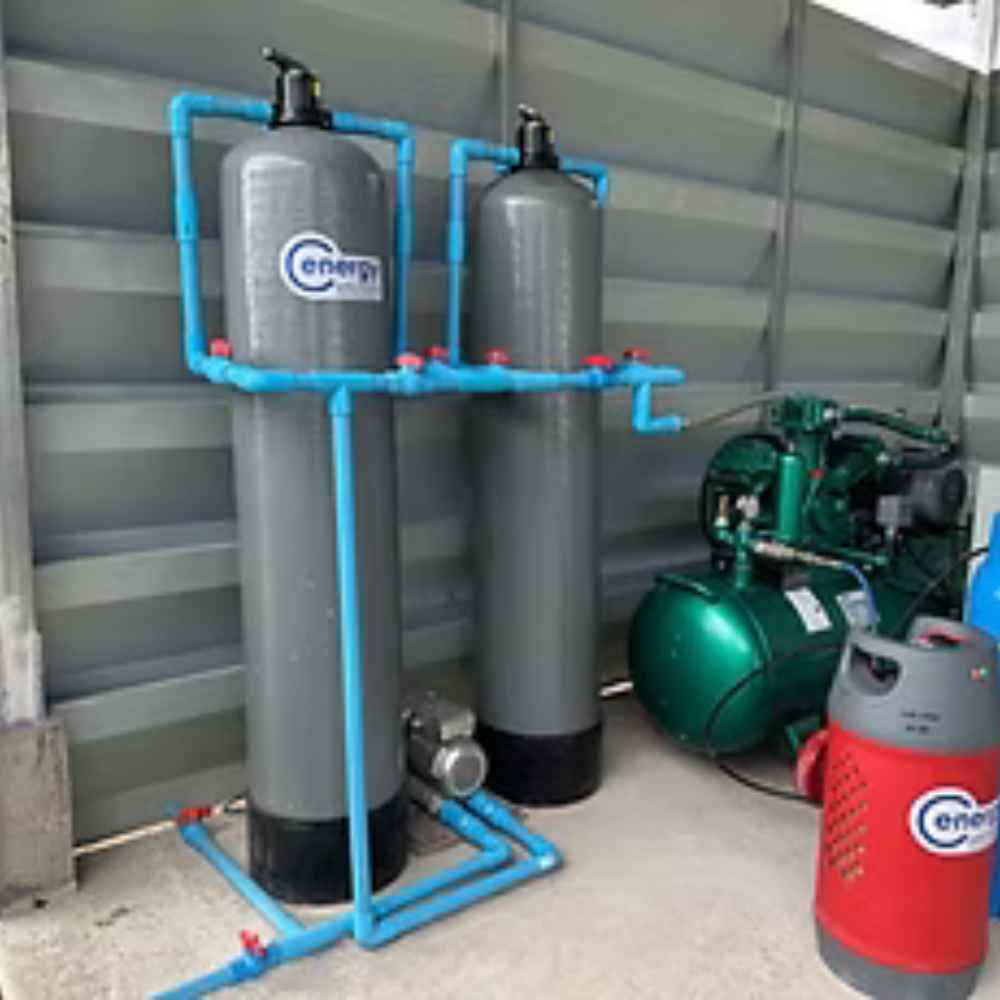
About Biogas Cleaning System
A biogas purification system is a series of processes designed to remove or reduce various impurities contained in raw biogas, such as hydrogen sulfide (H₂S), water vapor, particulates, and other components. This process aims to improve the quality of biogas so that it is safer and more suitable for use in various energy equipment and applications.
Biogas that has undergone the purification process can be used for household needs, boilers, gas engines, power generation, or further upgraded into biomethane. The purification system can be tailored to the quality and capacity of the biogas as well as the user’s needs.
Biogas digesters produce biogas and bioslurry, but raw biogas may also contain hydrogen sulfide (H₂S). H₂S is a toxic and corrosive gas that can pose safety risks at high concentrations. Under certain conditions, the presence of H₂S combined with moisture can also increase the risk of corrosion in piping, burners, engines, and biogas utilization equipment.
H₂S has a rotten-egg odor at low concentrations and is heavier than air, so it can accumulate in low-lying areas or poorly ventilated spaces. However, odor cannot be relied upon as a safety indicator, as the ability to detect H₂S can be diminished at higher concentrations. Therefore, biogas must undergo an H₂S reduction process before use, primarily to protect users and equipment and to improve the cooling system.
The H₂S Cleaning System is designed to reduce the H₂S content in biogas through a treatment process tailored to the gas’s characteristics and its intended application.
Purify the gas. Protect equipment. Improve biogas utilization.
Biogas Nusantara provides biogas purification systems that can be tailored to the characteristics and requirements of the gas. The systems may include particulate filtration, H₂S reduction to zero ppm, moisture removal, and gas conditioning before use in energy-utilization equipment. The choice of technology is based on biogas quality, flow rate, and intended use.
Each biogas source has different characteristics. Therefore, the configuration of the purification system can be tailored to the biogas production capacity, gas quality, operating pressure, and user needs. The system can be designed for residential, livestock, industrial, or power generation applications.