Biogas Solutions for Sustainable Livestock Farming
Biogas Nusantara supports the livestock sector through technological solutions that integrate livestock manure management with the use of renewable energy. Cattle manure and suitable organic livestock waste can be processed through an anaerobic process to produce biogas as an alternative energy source for farm operations and other productive activities.
In addition to generating energy, the biogas processing produces a residue—or bioslurry—that can potentially be used as organic fertilizer or a soil conditioner after its quality and suitability have been evaluated. This approach opens opportunities to reduce unmanaged waste while linking livestock operations with the agricultural sector.
Biogas Nusantara offers technological solutions tailored to the number of livestock, the volume of manure available, energy needs, barn conditions, and site characteristics. Through integrated waste management and energy utilization, we support the development of more efficient and sustainable livestock businesses.
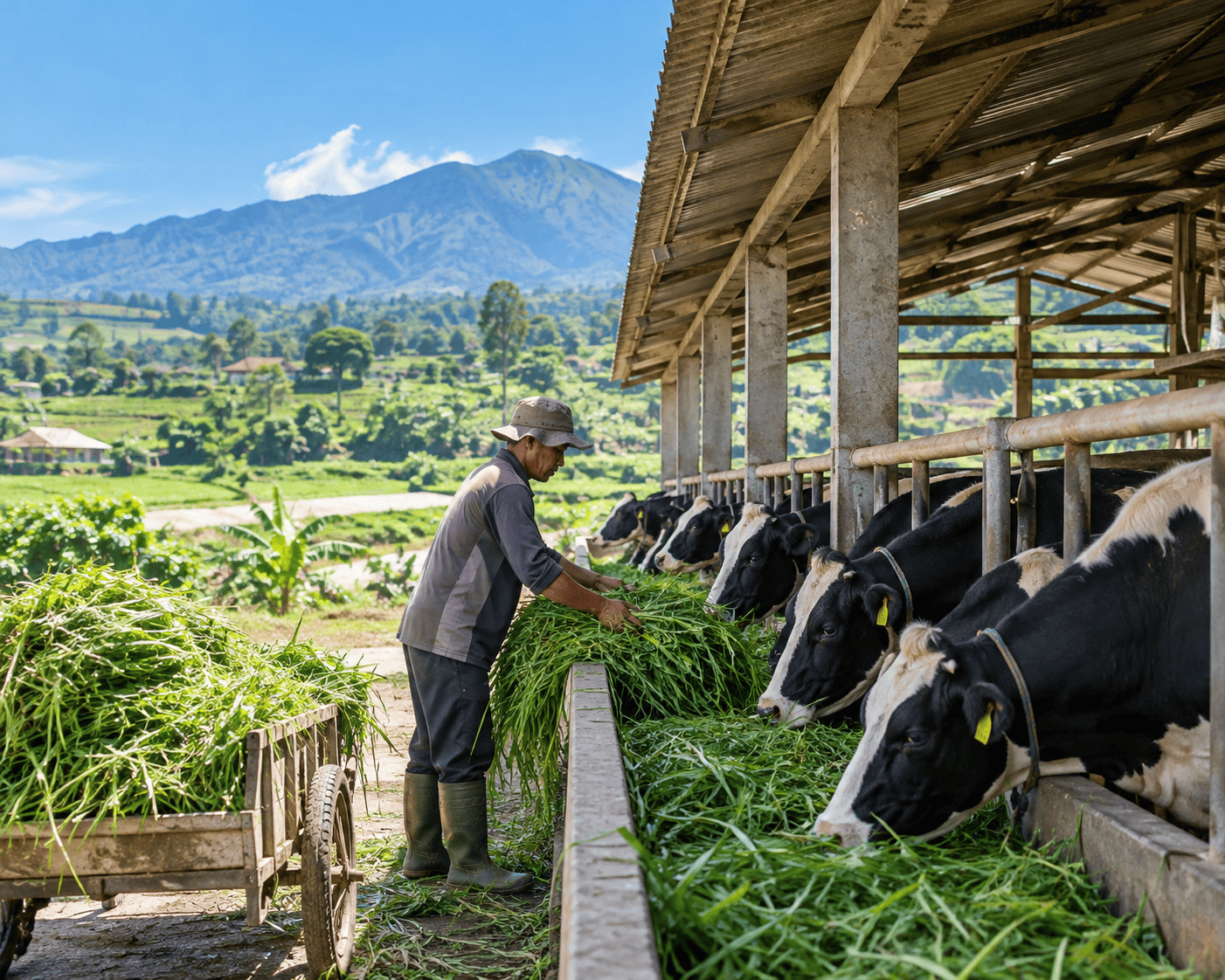
Biogas Nusantara supports the selection of biogas technology for dairy and beef cattle farms, as well as other livestock operations that produce suitable organic material. The system is designed with consideration for the number of livestock, daily manure volume, energy requirements, water availability, and the conditions and layout of the barns.
The biogas produced can potentially be used for cooking, water heating, and other energy applications in accordance with production capacity and equipment specifications. Technology selection is based on a technical evaluation to ensure the system meets the specific needs of each farm.
Proper management of livestock manure can help reduce waste accumulation and open up opportunities for the utilization of organic resources. Through an anaerobic process, suitable livestock manure can be processed to produce biogas as well as a residue known as bioslurry.
Bioslurry has the potential to be utilized in agricultural activities after its quality, safety, and suitability have been evaluated. Thus, biogas systems can bridge the gap between livestock farming and agriculture through a more integrated approach to resource utilization.
Biogas Nusantara supports livestock farmers in identifying technological solutions based on their needs and on-site operational conditions. Factors taken into consideration include the availability of raw materials, estimated biogas production potential, energy requirements, equipment selection, and management of process residues.
Each system must be tailored to the scale of the operation and its technical and economic feasibility. This approach helps livestock farmers assess the potential for implementing biogas as part of their waste management strategy, energy efficiency efforts, and the development of sustainable livestock operations.