
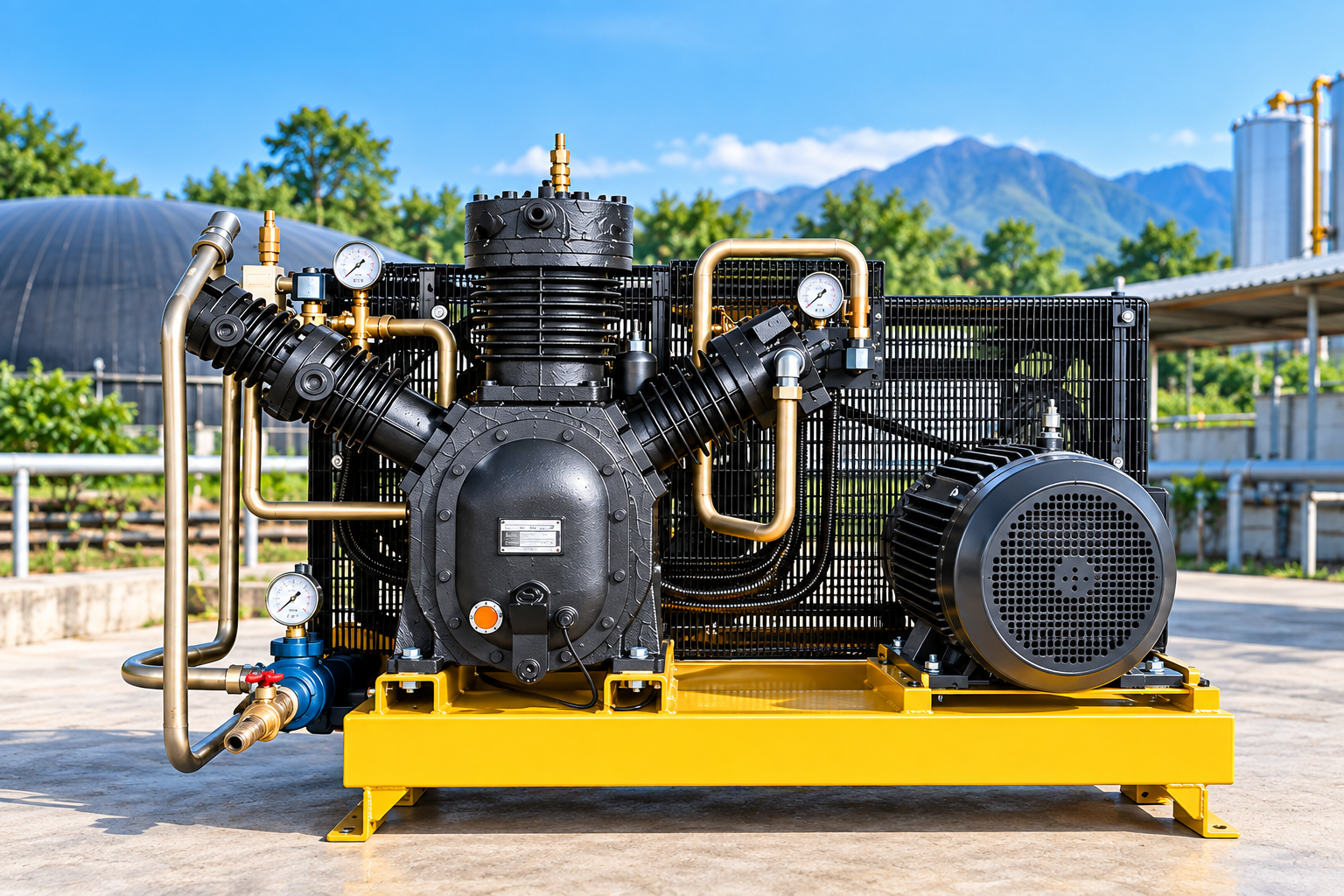
About Biogas Compressor
Biogas must be compressed and stored so it can be utilized more flexibly as needed. When biogas production is not accompanied by adequate storage and utilization systems, some of the gas may be released into the atmosphere or, under certain conditions, burned off through a flaring system. In fact, biogas is a renewable energy source that can be used as an alternative to reduce the use of conventional fuels and biomass such as wood and other materials.
Biogas compressor systems are designed to increase the pressure of biogas so that the gas can be transported, compressed, and stored more effectively before use. These systems can integrate with various biogas storage and distribution configurations, with pressure and capacity options tailored to project requirements.
With the right compression and storage systems, biogas can be stored when production exceeds current demand and reused as needed, allowing for more optimal and planned utilization of biogas energy.
Biogas compressors are available in a variety of capacities and pressures to meet the needs of each project. System selection can be tailored to the biogas flow rate, storage requirements, distribution needs, and end-use applications. Details on models, capacities, operating pressures, and technical specifications are available in the technical specification sheet.
The compression system is designed to integrate with various biogas configurations, including storage and distribution systems. The compressor configuration is tailored to operating conditions, gas flow requirements, required pressure, and the supporting systems in use. Proper design helps ensure that the compression process operates stably and supports more effective utilization of biogas.
Every biogas project has its own unique characteristics and requirements. Biogas Nusantara helps determine the appropriate compressor configuration based on the biogas source, production capacity, pressure requirements, storage system, and end use. Our team can assist with everything from equipment selection to system integration, tailored to the project’s specific needs.